
World
Ramona Wadi
February 2, 2021
© Photo: REUTERS/Phil Noble

The symbolic “Australia Day” celebrations should be juxtaposed against the normalised violations occurring against indigenous populations and their terrain, Ramona Wadi writes.

January 26 marks Australia Day in colonial narratives, when the British First Fleet arrived in 1788 to establish a penal colony on indigenous land. For the Aboriginal people, the annual commemoration is a reminder of the colonial invasion and its ramifications – the historical massacres, heritage theft, exploitation of history and a political system which to date discriminates against the indigenous.

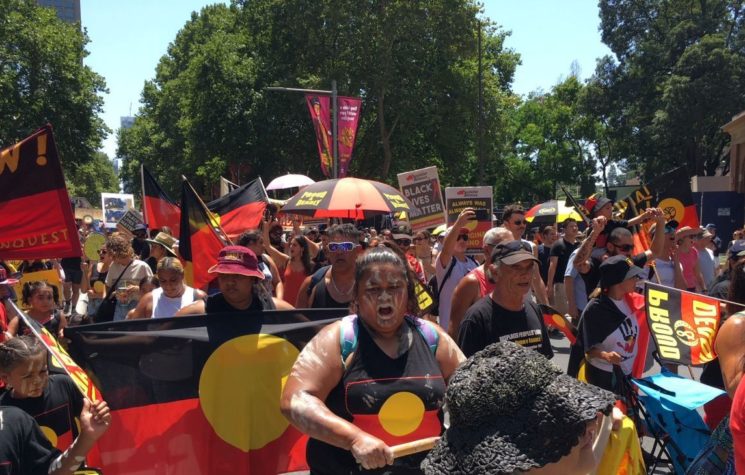
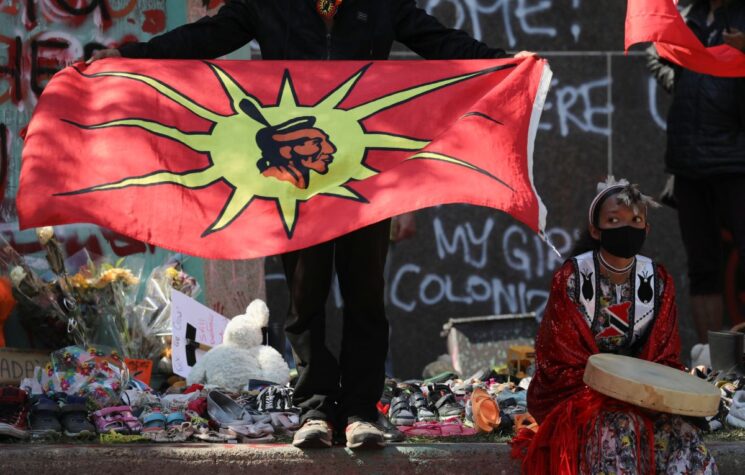
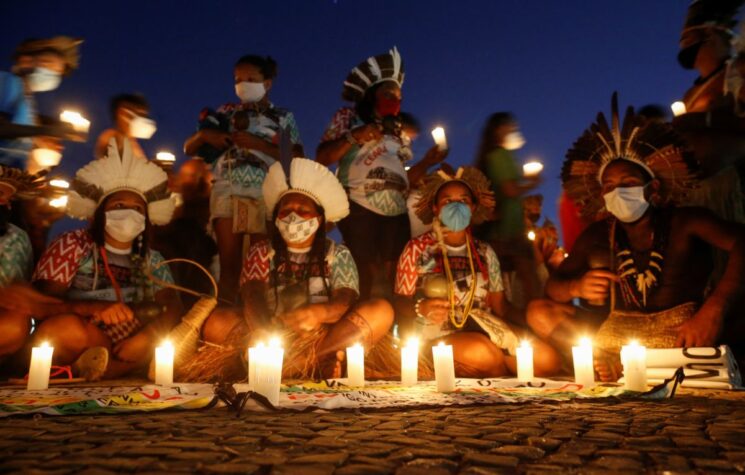
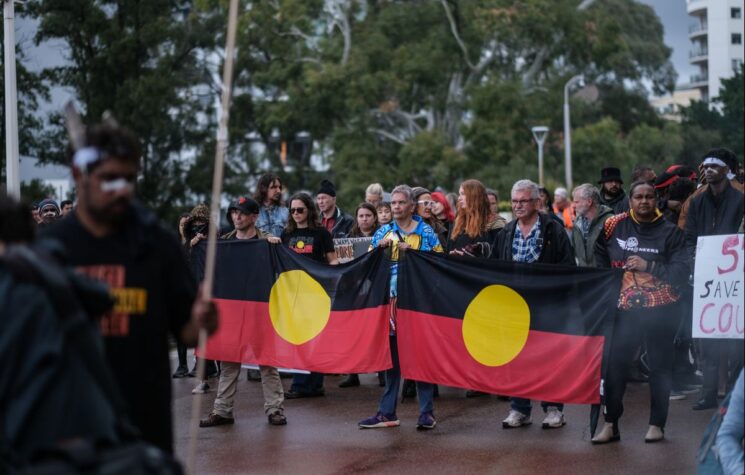
Defying Covid restrictions, Aboriginal people and activists demonstrated in Sydney and Brisbane, calling for the day to be celebrated on another date. The chosen date marginalises Aboriginal ancestry, attributing Australia’s history only to its colonial legacy.

Australian Prime Minister Scott Morrison described the day as “the moment where the journey to our modern nation began.” Such discourse of modernisation has been used in other colonial contexts – the legitimisation of destroying one history and people to impose a purportedly superior and industrialised culture. Establishing such settler dominance, alongside the economic exploitation of colonised territory, is the first step towards the political oblivion of the indigenous population. Indigenous resistance, often times organised belatedly upon realisation of the settler-colonial intent and politics, is then used as a pretext upon which to dehumanise and massacre the indigenous population. The colonial narrative, however, blames indigenous populations for their decline, once again exploiting the concept of modernisation to cultivate impunity.

The Australian government endorsed the UN Declaration on the Rights of Indigenous People in 2009, thus recognising the Aboriginal right to self-determination and compensation for crimes related to colonial violence. However, there is no signed agreement between the Australian government and the Aboriginal people which would commit to addressing the country’s colonial past, Aboriginal land rights, history and memory. Aboriginals are still not recognised as Australia’s first people.

Besides the debate on whether the commemoration should be scrapped, or the date changed, the question of Australia’s identity should be raised. With Aboriginals marginalised, economically and socially, the narrative remains settler-colonial, hence the commemoration has nothing to do with Australia’s earlier heritage.

The change needs to start from within – coming to terms with the settler-colonial history of the country in order to find common ground for reconciliation with the indigenous population.

Reconciliation Australia reveals that awareness regarding the colonial violence of British colonialism in the country is increasing. In 2016, the organisation identified five concepts upon which reconciliation could be achieved: historical acceptance, race relations, equality and equity, institutional integrity and unity. The 2021 State of Reconciliation Australia Report makes one important point – reconciliation with the Aboriginal people was sought by a small percentage of the early colonisers. Expounding upon this history would bring about an acknowledgement of the settler-colonial violence against the indigenous Aboriginal population, thus strengthening the historical, collective memory of Australia.

At government level, however, exploitation of indigenous lands, carrying on from the earlier colonial framework, remains paramount. Earlier in January the South Australian government gave permission to Argonaut Resources subsidiary company, Kelaray, to drill for mineral exploration at Lake Torrens – a site of Aboriginal heritage but without native title protection, as decided by a 2016 Supreme Court case. “I am not persuaded that a determination of native title in favour of any of the three applicants should be made in respect of any part of the claim area,” the judge ruled, citing the absence of proof of ownership in the pre-colonial era.

The symbolic “Australia Day” celebrations should be juxtaposed against the normalised violations occurring against indigenous populations and their terrain. Unless indigenous rights are politically recognised, the symbolism associated with Australia Day will take precedence over Aboriginal history and collective memory – the reason being that one commemoration is being carried out on a daily level in Australia, excluding the indigenous to pave the way for the colonial legacy to flourish.

Aboriginal Historical Memory and ‘Australia Day’

The symbolic “Australia Day” celebrations should be juxtaposed against the normalised violations occurring against indigenous populations and their terrain, Ramona Wadi writes.

January 26 marks Australia Day in colonial narratives, when the British First Fleet arrived in 1788 to establish a penal colony on indigenous land. For the Aboriginal people, the annual commemoration is a reminder of the colonial invasion and its ramifications – the historical massacres, heritage theft, exploitation of history and a political system which to date discriminates against the indigenous.

Defying Covid restrictions, Aboriginal people and activists demonstrated in Sydney and Brisbane, calling for the day to be celebrated on another date. The chosen date marginalises Aboriginal ancestry, attributing Australia’s history only to its colonial legacy.

Australian Prime Minister Scott Morrison described the day as “the moment where the journey to our modern nation began.” Such discourse of modernisation has been used in other colonial contexts – the legitimisation of destroying one history and people to impose a purportedly superior and industrialised culture. Establishing such settler dominance, alongside the economic exploitation of colonised territory, is the first step towards the political oblivion of the indigenous population. Indigenous resistance, often times organised belatedly upon realisation of the settler-colonial intent and politics, is then used as a pretext upon which to dehumanise and massacre the indigenous population. The colonial narrative, however, blames indigenous populations for their decline, once again exploiting the concept of modernisation to cultivate impunity.

The Australian government endorsed the UN Declaration on the Rights of Indigenous People in 2009, thus recognising the Aboriginal right to self-determination and compensation for crimes related to colonial violence. However, there is no signed agreement between the Australian government and the Aboriginal people which would commit to addressing the country’s colonial past, Aboriginal land rights, history and memory. Aboriginals are still not recognised as Australia’s first people.

Besides the debate on whether the commemoration should be scrapped, or the date changed, the question of Australia’s identity should be raised. With Aboriginals marginalised, economically and socially, the narrative remains settler-colonial, hence the commemoration has nothing to do with Australia’s earlier heritage.

The change needs to start from within – coming to terms with the settler-colonial history of the country in order to find common ground for reconciliation with the indigenous population.

Reconciliation Australia reveals that awareness regarding the colonial violence of British colonialism in the country is increasing. In 2016, the organisation identified five concepts upon which reconciliation could be achieved: historical acceptance, race relations, equality and equity, institutional integrity and unity. The 2021 State of Reconciliation Australia Report makes one important point – reconciliation with the Aboriginal people was sought by a small percentage of the early colonisers. Expounding upon this history would bring about an acknowledgement of the settler-colonial violence against the indigenous Aboriginal population, thus strengthening the historical, collective memory of Australia.

At government level, however, exploitation of indigenous lands, carrying on from the earlier colonial framework, remains paramount. Earlier in January the South Australian government gave permission to Argonaut Resources subsidiary company, Kelaray, to drill for mineral exploration at Lake Torrens – a site of Aboriginal heritage but without native title protection, as decided by a 2016 Supreme Court case. “I am not persuaded that a determination of native title in favour of any of the three applicants should be made in respect of any part of the claim area,” the judge ruled, citing the absence of proof of ownership in the pre-colonial era.

The symbolic “Australia Day” celebrations should be juxtaposed against the normalised violations occurring against indigenous populations and their terrain. Unless indigenous rights are politically recognised, the symbolism associated with Australia Day will take precedence over Aboriginal history and collective memory – the reason being that one commemoration is being carried out on a daily level in Australia, excluding the indigenous to pave the way for the colonial legacy to flourish.
The symbolic “Australia Day” celebrations should be juxtaposed against the normalised violations occurring against indigenous populations and their terrain, Ramona Wadi writes.

January 26 marks Australia Day in colonial narratives, when the British First Fleet arrived in 1788 to establish a penal colony on indigenous land. For the Aboriginal people, the annual commemoration is a reminder of the colonial invasion and its ramifications – the historical massacres, heritage theft, exploitation of history and a political system which to date discriminates against the indigenous.

Defying Covid restrictions, Aboriginal people and activists demonstrated in Sydney and Brisbane, calling for the day to be celebrated on another date. The chosen date marginalises Aboriginal ancestry, attributing Australia’s history only to its colonial legacy.

Australian Prime Minister Scott Morrison described the day as “the moment where the journey to our modern nation began.” Such discourse of modernisation has been used in other colonial contexts – the legitimisation of destroying one history and people to impose a purportedly superior and industrialised culture. Establishing such settler dominance, alongside the economic exploitation of colonised territory, is the first step towards the political oblivion of the indigenous population. Indigenous resistance, often times organised belatedly upon realisation of the settler-colonial intent and politics, is then used as a pretext upon which to dehumanise and massacre the indigenous population. The colonial narrative, however, blames indigenous populations for their decline, once again exploiting the concept of modernisation to cultivate impunity.

The Australian government endorsed the UN Declaration on the Rights of Indigenous People in 2009, thus recognising the Aboriginal right to self-determination and compensation for crimes related to colonial violence. However, there is no signed agreement between the Australian government and the Aboriginal people which would commit to addressing the country’s colonial past, Aboriginal land rights, history and memory. Aboriginals are still not recognised as Australia’s first people.

Besides the debate on whether the commemoration should be scrapped, or the date changed, the question of Australia’s identity should be raised. With Aboriginals marginalised, economically and socially, the narrative remains settler-colonial, hence the commemoration has nothing to do with Australia’s earlier heritage.

The change needs to start from within – coming to terms with the settler-colonial history of the country in order to find common ground for reconciliation with the indigenous population.

Reconciliation Australia reveals that awareness regarding the colonial violence of British colonialism in the country is increasing. In 2016, the organisation identified five concepts upon which reconciliation could be achieved: historical acceptance, race relations, equality and equity, institutional integrity and unity. The 2021 State of Reconciliation Australia Report makes one important point – reconciliation with the Aboriginal people was sought by a small percentage of the early colonisers. Expounding upon this history would bring about an acknowledgement of the settler-colonial violence against the indigenous Aboriginal population, thus strengthening the historical, collective memory of Australia.

At government level, however, exploitation of indigenous lands, carrying on from the earlier colonial framework, remains paramount. Earlier in January the South Australian government gave permission to Argonaut Resources subsidiary company, Kelaray, to drill for mineral exploration at Lake Torrens – a site of Aboriginal heritage but without native title protection, as decided by a 2016 Supreme Court case. “I am not persuaded that a determination of native title in favour of any of the three applicants should be made in respect of any part of the claim area,” the judge ruled, citing the absence of proof of ownership in the pre-colonial era.

The symbolic “Australia Day” celebrations should be juxtaposed against the normalised violations occurring against indigenous populations and their terrain. Unless indigenous rights are politically recognised, the symbolism associated with Australia Day will take precedence over Aboriginal history and collective memory – the reason being that one commemoration is being carried out on a daily level in Australia, excluding the indigenous to pave the way for the colonial legacy to flourish.

The views of individual contributors do not necessarily represent those of the Strategic Culture Foundation.

See also

February 20, 2022
February 14, 2022

See also

February 20, 2022
February 14, 2022
The views of individual contributors do not necessarily represent those of the Strategic Culture Foundation.
n="center"> SIGN UP!!! CLICK HERE TO GET 52 BOOKS FREE!!

SIGN UP!! FOR BOOKS AND REGULAR ARTICLES

https://againstsatanism.com/Prices.htm


HOW TO DEFEAT SATANISM AND LUCIFERIANISM AND BOOST YOUR EVOLUTION THROUGH ENERGY ENHANCEMENT MEDITATION

"I have experience of many forms of meditation and practices for self improvement including: Transcendental meditation (TM) 12 years, Kriya Yoga 9 years, Sushila Buddhi Dharma (SUBUD) 7 years, and more recently the Sedona Method and the Course in Miracles.

The Energy Enhancement programme encapsulates and expands all of these systems, it is complete and no questions are left unanswered."

Jean, NUCLEAR ENGINEER


Energy Enhancement Level 0 Super Chi Prana, Power, Strength, Immortality

https://www.energyenhancement.org/LEVEL-Energy-Enhancement-Super-Chi-Immortality-Prana-Meditation-Course.htm

Energy Enhancement Meditation LEVEL 1 Immortality - Activate the Antahkarana! Gain Infinite Energy from the Chakras above the Head - Power UP!! Open Your Third Eye, Gain Super Samadhi Kundalini Alchemical VITRIOL Energy. Ground All Negative Energies. Access Quantum Immortality

https://www.energyenhancement.org/Level1.htm

Energy Enhancement Meditation LEVEL 2 - The Energy Enhancement Seven Step Process to Totally Remove Energy Blockages, Totally Remove All Problems, Totally Remove Negative Emotions, Heal Your DNA, Remove your Karma - OPEN YOUR LIFE!!

https://www.energyenhancement.org/Level2.htm

Energy Enhancement Meditation LEVEL 3 - Eliminate even Deeper Energy Blockages - The Removal of Strategies. Quantum Integration. The Karma Cleaning Process to Totally Eliminate All Your Karma, all your Trauma, all your Energy Blockages from All your Past Lifetimes!!

https://www.energyenhancement.org/Level3.htm

Energy Enhancement Meditation LEVEL 4 - Stop the Suck!! Heal All your Relationships!! Find Your Twin Flame!! MASTER ENERGY CONNECTIONS AND RELATIONSHIPS

https://www.energyenhancement.org/Level4.htm


OUR SPECIAL MEDITATION REVOLUTION OFFER!!

WE HAVE THE TECHNOLOGY

WE CAN REMOVE YOUR ENERGY BLOCKAGES, ENTITIES AND DEMONS

WE CAN RE-BUILD YOU..